
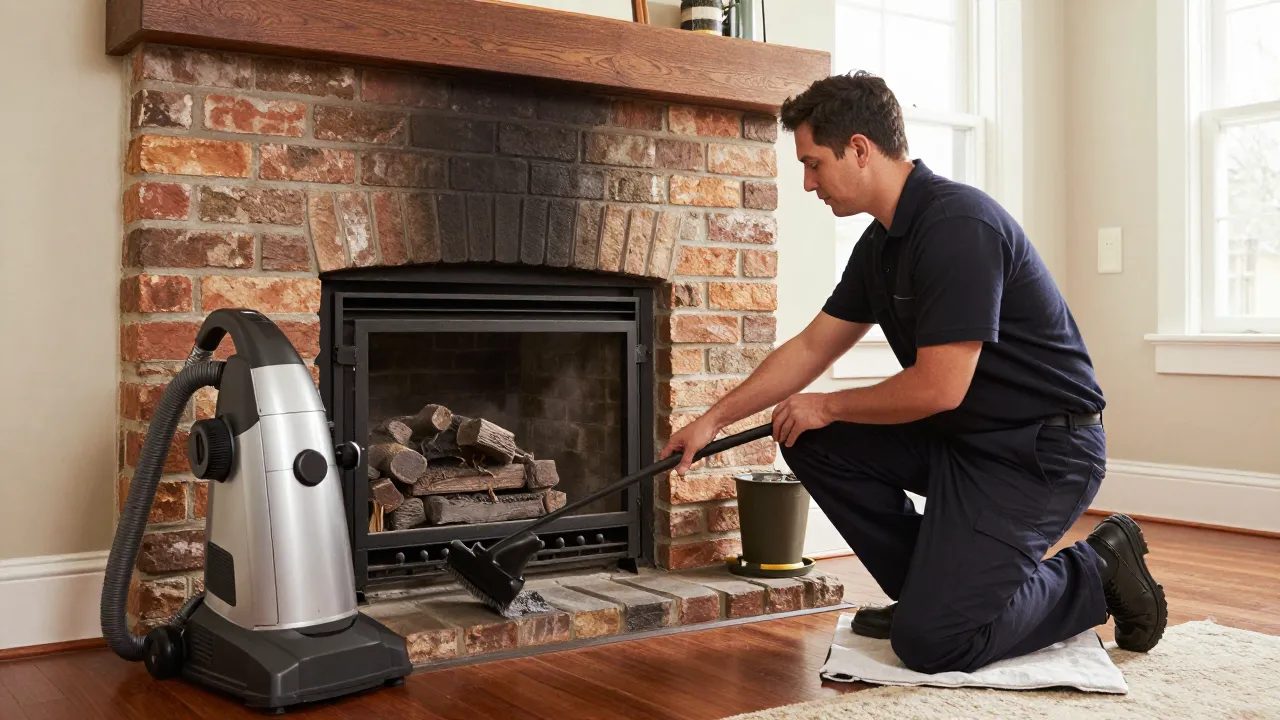
Signs Your Chimney Needs Cleaning
Campfire smell in July, smoke rolling back, black flakes in the firebox — the seven signs your flue is asking for a sweep before burn season.
Read the Article
The fast answer: a wood stove insert and a pellet insert both turn an open, heat-losing fireplace into a sealed heating appliance that vents through a liner — but they ask for different daily habits. A wood insert burns split cordwood you load by hand and gives strong heat even when the power is out. A pellet insert burns small compressed-wood pellets fed from a hopper, lights with a button and holds a steadier setting, but it needs electricity to run its feed and fans. The featured photo shows a real wood stove set into a brick fireplace corner on one of our Maryland jobs. Which one fits depends on your wood supply, your routine, and what your existing flue can safely support.
An open fireplace sends most of its heat straight up the flue. An insert closes that loop: a sealed firebox fitted into the existing opening, connected to a liner sized for the appliance, with a door, controlled air intake and, on many models, a blower that pushes warmed air into the room. The surround and hearth stay; the way the fire burns and vents changes completely. That is why an insert is a change of appliance, not a drop-in purchase — the chimney has to be proven ready first.
A wood insert works the way a freestanding wood stove does, only built into your fireplace. You load split, seasoned hardwood, light it, and manage the air control as the fire establishes. In return you get deep, radiant heat that suits larger rooms and longer burns, and a fire that keeps working during a winter power outage because it does not depend on a feed motor or fan to burn safely.
The trade-off is the work: stacking and storing dry wood, carrying it in, removing ash, and learning your stove's rhythm so fires burn hot and clean rather than low and smoldering. Cool, smoldering fires are also the fastest route to creosote — our guide to the three stages of creosote shows what that build-up becomes if it is left to harden.
A pellet insert stores pellets in a built-in hopper and feeds them into the burn area automatically. Ignition is push-button, the heat setting is more even through the day, and refuelling means pouring in a bag rather than splitting and stacking cordwood. Ash is finer and usually less in volume, and the exhaust is handled through a dedicated venting path designed for the appliance.
The trade-offs are different, not smaller. A pellet insert needs electricity — without power, the feed and fans stop. It has moving parts, sensors and an igniter that need periodic service, and it depends on pellets stored dry indoors. Its vent and burn pot also need regular cleaning; fine pellet ash builds where you cannot see it, and a neglected vent makes the stove burn poorly long before it stops altogether.
Whichever fuel you choose, the chimney work underneath is the same, and it starts before any appliance is ordered. A Level 2 camera inspection documents the flue tile by tile, because an insert's liner has to run inside a flue that is structurally sound and free of hidden damage. Most inserts are installed with a new stainless liner sized to the appliance — an old tile flue built for an open fireplace is usually far too large for a sealed insert, and an oversized flue lets exhaust cool, draft lazily and lay down deposits faster. Our comparison of clay tile and stainless steel flue liners explains that sizing problem in detail.
The top and the bottom matter too. A sound crown and a fitted cap keep water out of the new liner system, and hearth and clearances have to match the appliance's requirements. Prefab fireplaces need extra care: only an insert approved for that specific firebox belongs in one. Our wood stove installation work follows that sequence — inspect, size, line, then install.
Choose wood if you have access to seasoned hardwood, want heat that does not depend on the grid, and like tending a real fire. Choose pellet if you want push-button starts, a steadier all-day setting, and no woodpile — and you are comfortable with a service rhythm for its moving parts and a power plan for outages. Pick the fuel whose daily work you will still be happy doing in February, not just in November when the idea is new.
Start with the flue, not the showroom. Tell us what fireplace you have now, how you hope to use the heat, and whether you already burn wood — and we will tell you honestly which insert type your chimney can support and what liner work it needs first. Eagle Chimney Service is Licensed & Insured · MHIC #117311, and every inspection ends with photos of what we found, emailed the same day. Call (855) 424-6217 or send the lead form on our appointment page, and let us get your fireplace ready to do real heating work this season.
Talk to a specialist — photo-documented inspections and upfront written estimates across 375 communities in Maryland, DC and Northern Virginia.
Campfire smell in July, smoke rolling back, black flakes in the firebox — the seven signs your flue is asking for a sweep before burn season.
Read the Article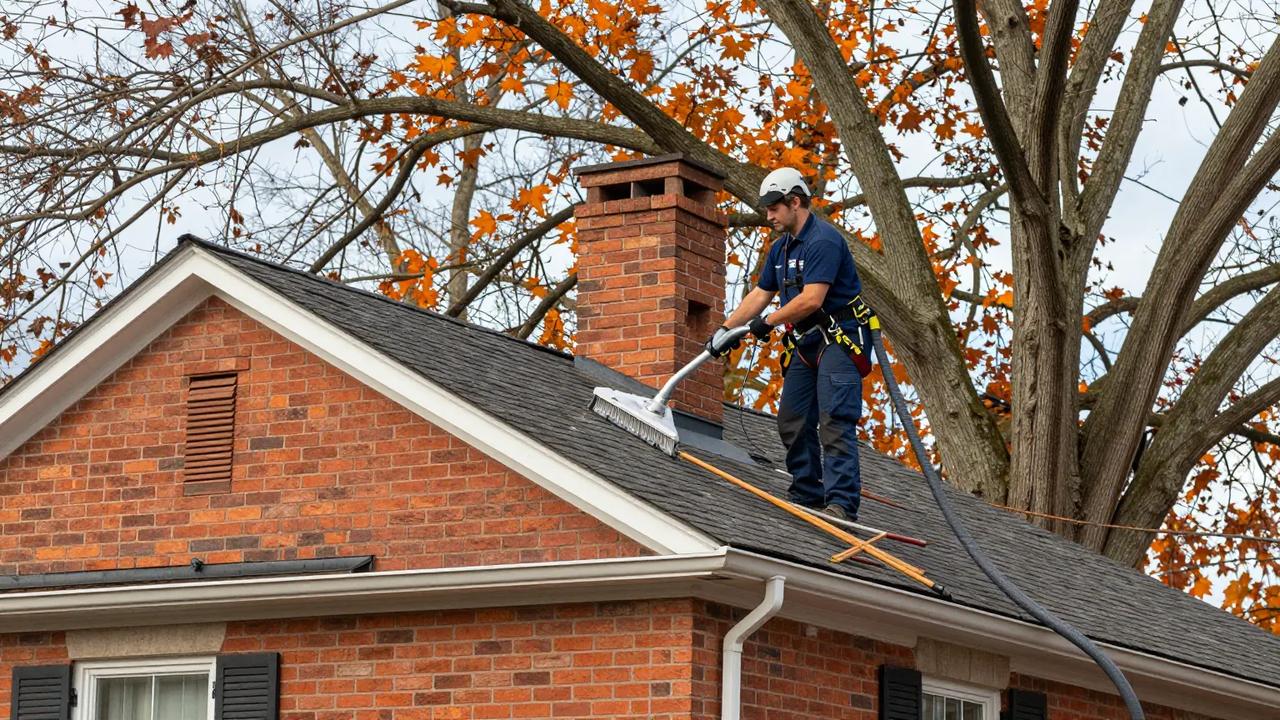
What actually drives the price of a chimney sweep in Maryland — flue count, creosote stage, access — and how to read any quote you are given.
Read the Article
A cap costs a fraction of the repairs it prevents. The Maryland math on rain, raccoons and rusted dampers — and when a cap is not the answer.
Read the Article