
Signs Your Chimney Needs Cleaning
Campfire smell in July, smoke rolling back, black flakes in the firebox — the seven signs your flue is asking for a sweep before burn season.
Read the Article
The fast answer: creosote — the residue wood smoke leaves inside your flue — builds in three stages. Stage 1 is dusty soot that brushes out easily. Stage 2 is crunchy, flaky tar that needs rotary tools. Stage 3 is a hard, shiny glaze: the most flammable form, the hardest to remove, and the one most likely to turn an ordinary fire into a chimney fire. The stage in your flue, not just the thickness, decides what a sweep has to do — and November, when Maryland fireplaces start working every night, is exactly when it is worth knowing which stage you have.
Stage 1 creosote is a fine, dusty or slightly granular soot coating the flue walls. It is what a well-run fireplace produces in normal use: dry wood, hot fires and a flue that warms up quickly all keep deposits in this light form. Stage 1 is not harmless — it is still fuel, and it still narrows the flue as it thickens — but it is the manageable stage. Standard brushes and rods remove it cleanly, which is why a routine chimney cleaning on a stage 1 flue is a straightforward visit. Most chimneys that are swept on schedule live their whole lives at stage 1.
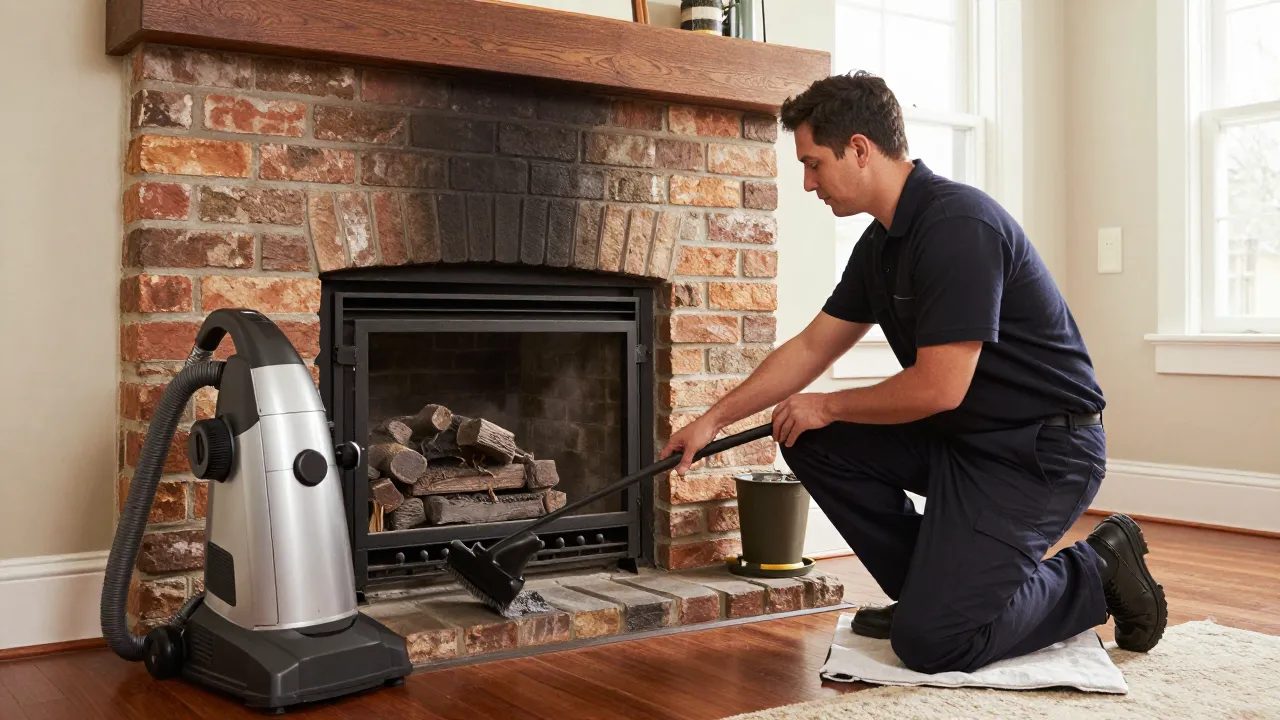
Leave stage 1 in place through more burning and it hardens into stage 2: crunchy, flaky deposits, sometimes mixed with tar-like patches, that cling to the liner instead of dusting it. You may see the evidence yourself — black flakes shedding into the firebox are stage 2 letting go. Brushes alone tend to skate over these deposits, so sweeps switch to rotary tools: the whip brush staged at the hearth in this article's photo is made for exactly this stage, spinning the flakes off the flue walls so they can be vacuumed out. Stage 2 is the warning stage. The flue is telling you the deposits are outrunning your burning habits.
Stage 3 creosote — glazed creosote — is a dense, hard coating that looks like black glass or tar poured down the flue. It forms when heavy deposits are repeatedly heated and cooled until they bake into a glaze, and it changes the job completely. A brush will not touch it. Removing it takes specialized rotary chains, and in severe cases chemical treatment or relining, because the glaze bonds to the liner itself.
It is also the dangerous stage, for two reasons. First, the glaze concentrates fuel: it ignites readily and burns extremely hot, and a stage 3 chimney fire can crack clay tiles and damage liners in a single event. Second, it hides. A flue can look merely dirty from the firebox while the glaze sits higher up, which is why a camera scan matters when a sweep suspects stage 3 — our guide to the signs your chimney needs cleaning covers the other clues that show up around the house.
Creosote is unburned fuel from the smoke, and anything that makes smoke cooler, wetter or slower gives it more time to condense on the flue walls:
Partly. Shine a flashlight up the flue from the firebox: a dusty gray-black coating suggests stage 1, visible flakes and crust suggest stage 2, and a smooth, shiny, almost wet-looking black surface is the glaze. Flakes in the firebox, a strong campfire smell when you are not burning, and fires that have started burning sluggishly all point the same way. What you cannot do from the hearth is see the full height of the flue — the worst deposits often sit above the smoke chamber, out of sight. That is what the inspection is for: a Level 1 inspection reads what is reachable, and a Level 2 camera inspection documents the flue tile by tile when the stage is in doubt.
The habits are simple and they compound: burn dry, seasoned hardwood; build hot, small fires rather than big smoldering ones; let the flue warm up before settling the fire in; and keep the annual rhythm — inspect every year, and sweep when deposits reach 1/8 inch. Caught at stage 1, creosote is routine maintenance. Caught at stage 3, it is a removal project standing between you and using your fireplace at all.
That is a question a camera answers in one visit — and mid-November is the right time to ask it, before the heaviest burning weeks of the Maryland winter. Eagle Chimney Service is Licensed & Insured · MHIC #117311, and every visit ends with photos of what we found, the same day. Call (855) 424-6217 or send the lead form on our appointment page, and we will tell you honestly which stage you have — and exactly what, if anything, it needs.
Talk to a specialist — photo-documented inspections and upfront written estimates across 375 communities in Maryland, DC and Northern Virginia.
Campfire smell in July, smoke rolling back, black flakes in the firebox — the seven signs your flue is asking for a sweep before burn season.
Read the Article
What actually drives the price of a chimney sweep in Maryland — flue count, creosote stage, access — and how to read any quote you are given.
Read the Article
A cap costs a fraction of the repairs it prevents. The Maryland math on rain, raccoons and rusted dampers — and when a cap is not the answer.
Read the Article