
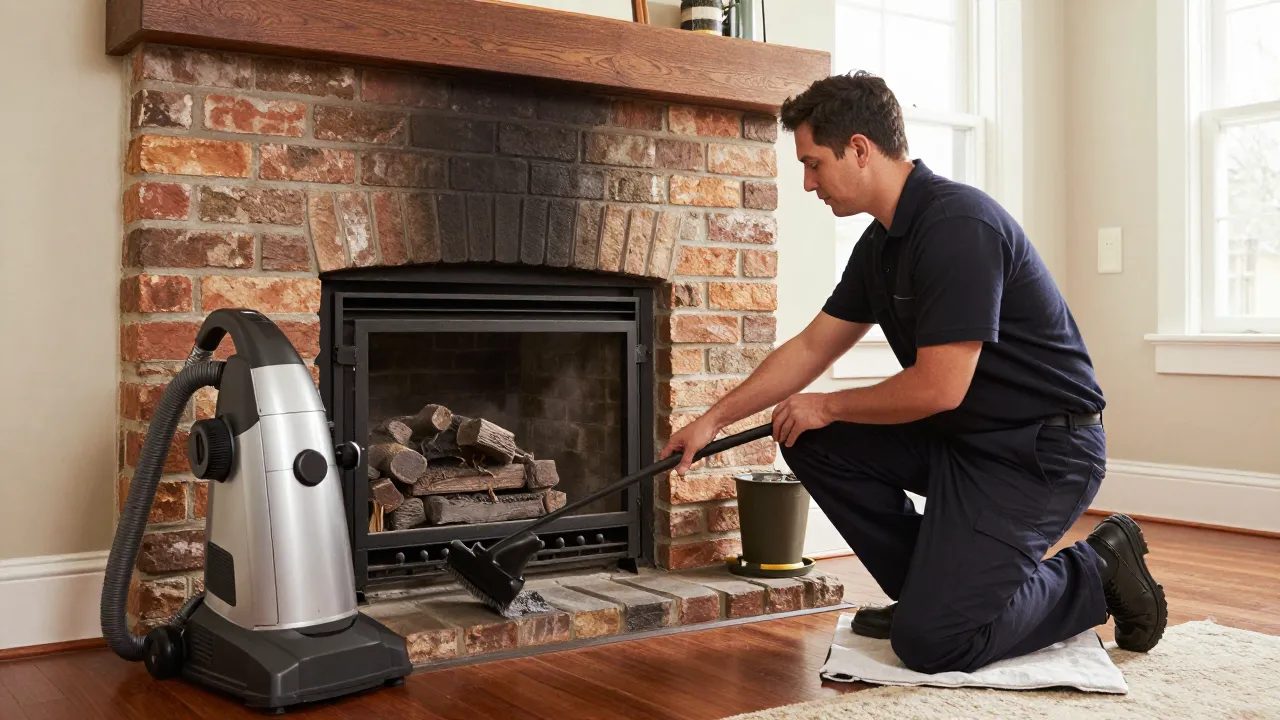
Signs Your Chimney Needs Cleaning
Campfire smell in July, smoke rolling back, black flakes in the firebox — the seven signs your flue is asking for a sweep before burn season.
Read the Article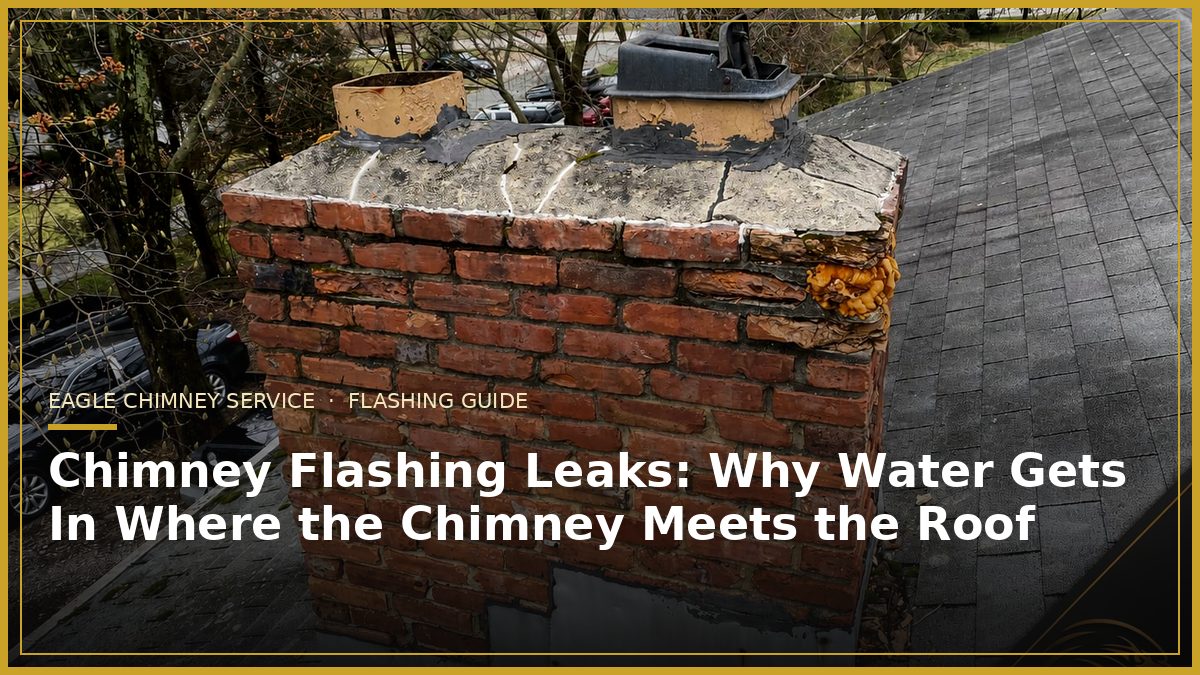
The fast answer: flashing is the layered metal system that seals the joint where your chimney passes through the roof. When it rusts, lifts, or was sealed with surface caulk instead of being built into the masonry, rain runs down the outside of the stack and into the house — showing up as ceiling stains, damp plaster, or water near the fireplace. A sound repair rebuilds the flashing layers properly; a tube of sealant on top of failed metal only hides the leak for a season. The featured photo shows a real damaged chimney top and flashing area from one of our Maryland jobs.
A chimney and a roof move differently. Brick expands and contracts with heat and seasons, shingles age and flex, and the joint between them is one of the most leak-prone places on any house. Flashing handles that movement in layers. Step flashing is woven in with the shingles along the sides of the stack, so water running down the roof is directed out onto the shingle surface instead of behind it. Counter flashing is set into a mortar joint in the brick and folds down over the step flashing, shedding water from the masonry face. A cricket — a small peaked diverter on the uphill side of a wide chimney — may also be part of the system, splitting water and debris so they do not pool against the stack.
When those layers are present, correctly overlapped, and in sound metal, the joint stays dry for decades. When any layer is missing, reversed, rusted through, or simply glued to the surface, the joint becomes a funnel.
None of these prove flashing alone is at fault. A cracked crown, open mortar joints, or a missing cap can send water to some of the same places, which is why our chimney leak detection work starts with a full look at the top of the system, with photos, before any one part is blamed.
The common failures our crews find are consistent. Metal rusts, especially older galvanized flashing that was never meant to be a lifetime part. Sealant joints open as the chimney and roof move at different rates — a seal that depends entirely on caulk is a seal on a countdown. Counter flashing that was face-nailed or surface-glued instead of being set into a reglet cut in the mortar joint pulls away from the brick. And step flashing can be defeated by later roofing work: new shingles laid over old flashing, or flashing bent and reused past its life, leave gaps that only show up in a hard rain.
Winter makes every one of these worse. Water that enters a small gap freezes, expands, and wedges the gap wider — the same freeze-thaw process described in our guide to chimney crown damage. A leak that was a faint stain in November can be active damage by spring.
Sealant has a legitimate finishing role in a proper flashing system. It is not a substitute for one. Smearing caulk or roof tar over a rusted or separated joint traps water as often as it sheds it, hides the metal condition underneath, and fails again as the joint moves — usually within a season or two. If a quote for a flashing leak is mostly a tube of sealant and a ladder, ask what is happening to the metal layers underneath it. Our chimney flashing repair approach is to expose the joint, judge the metal honestly, and rebuild what has failed.
Whichever tier your chimney needs, expect before-and-after photos of the joint itself — not just a view from the driveway. The flashing lives in a place you cannot inspect from the ground, so documentation is how you know what you paid for.
From inside, note when the stain changes: after every rain, only in wind-driven storms, or mainly after snow melts — that timing helps a leak diagnosis more than most homeowners expect. From the ground with binoculars, look for metal that is visibly lifted, rust-streaked, or coated in repeated layers of tar at the base of the stack. In the attic, if you can access it safely, damp sheathing near the chimney after rain confirms the leak is active. Do not climb onto a wet or steep roof to look closer, and do not add more sealant hoping to buy time through winter — trapped water does more damage than a known leak being scheduled properly.
Flashing lasts longest as part of a dry top-of-chimney system: a fitted cap over the flue, a sound crown shedding water away from the brick, and mortar joints kept in repair with proper tuckpointing when they recess. Fold the roofline into the annual rhythm you keep for the flue — inspect every year, sweep when deposits reach 1/8 inch — because the flashing check rides along with that visit, and late November, before the hardest freeze-thaw weeks, is the smart moment to catch a small separation.
Tell us where the stain is and when it grows, and we will start from the top of the stack and show you, in photos, exactly which layer is letting the water in — flashing, crown, cap, or masonry — before recommending the repair that fits it. Eagle Chimney Service is Licensed & Insured · MHIC #117311, and every job is photo-documented and emailed the same day. Call (855) 424-6217 or send the lead form on our appointment page, and let us get the joint between your chimney and your roof sealed properly before winter settles in.
Talk to a specialist — photo-documented inspections and upfront written estimates across 375 communities in Maryland, DC and Northern Virginia.
Campfire smell in July, smoke rolling back, black flakes in the firebox — the seven signs your flue is asking for a sweep before burn season.
Read the Article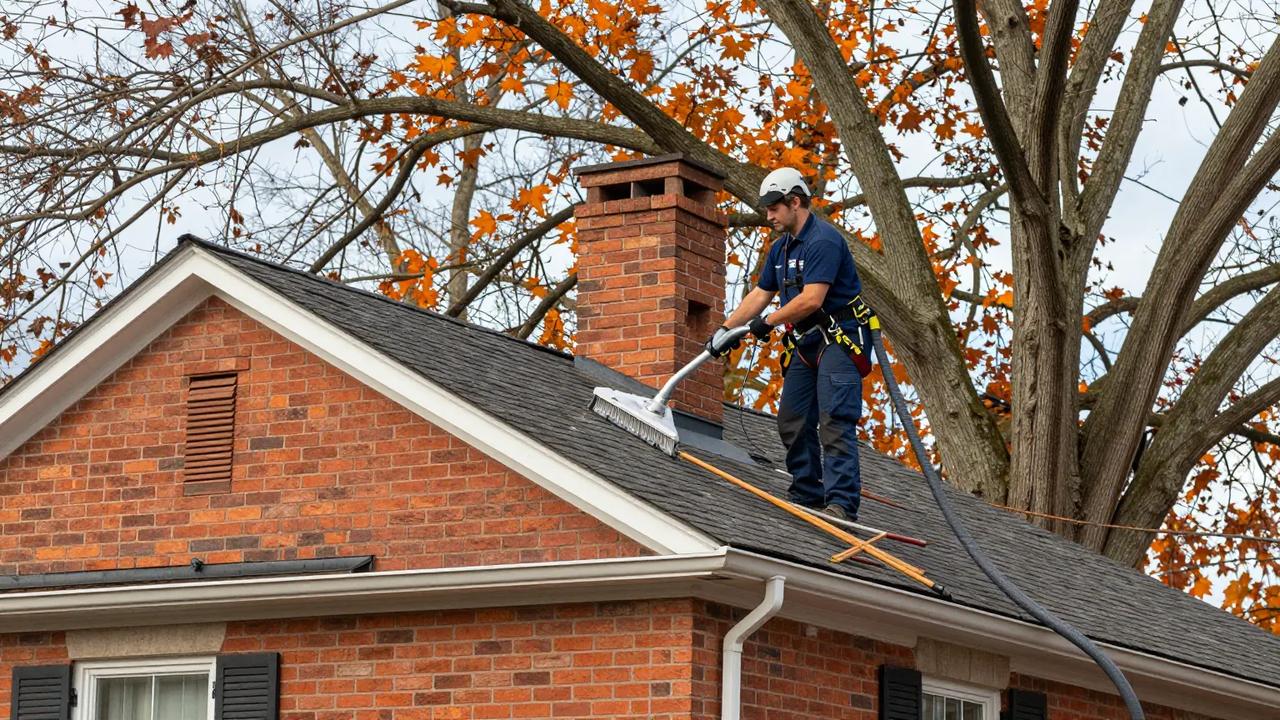
What actually drives the price of a chimney sweep in Maryland — flue count, creosote stage, access — and how to read any quote you are given.
Read the Article
A cap costs a fraction of the repairs it prevents. The Maryland math on rain, raccoons and rusted dampers — and when a cap is not the answer.
Read the Article