
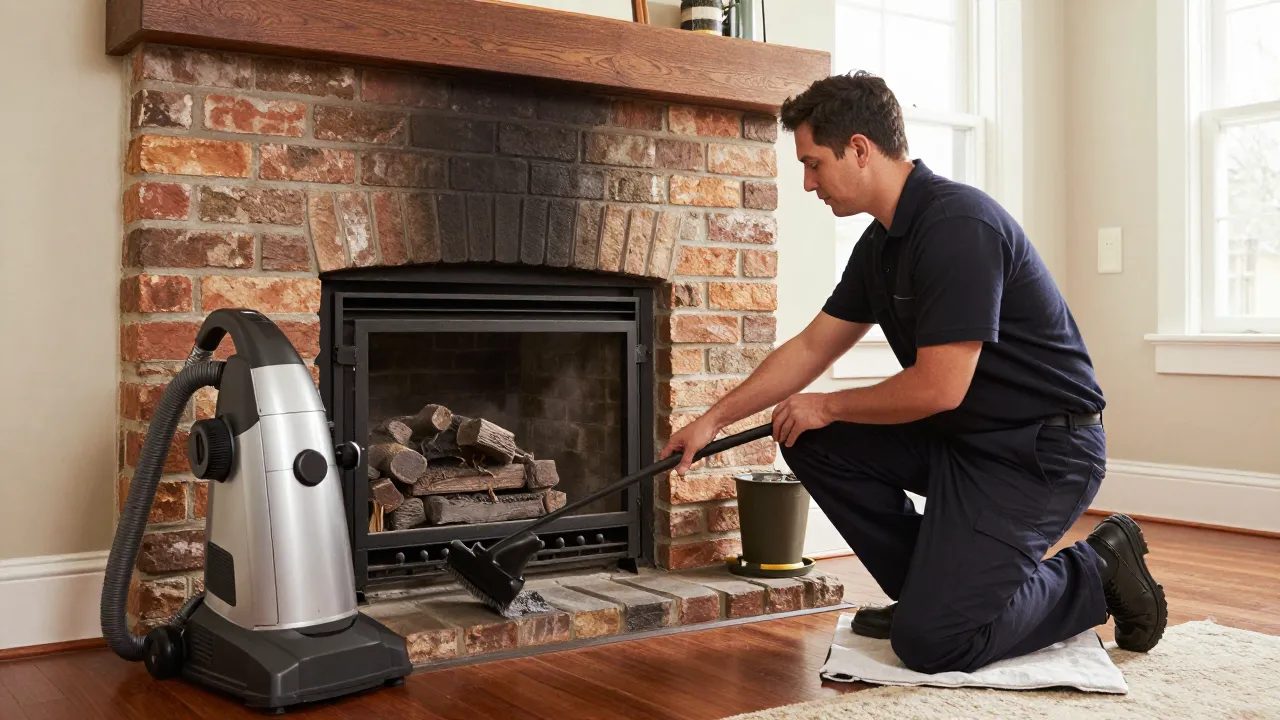
Signs Your Chimney Needs Cleaning
Campfire smell in July, smoke rolling back, black flakes in the firebox — the seven signs your flue is asking for a sweep before burn season.
Read the Article
Brick looks permanent, and on a Maryland chimney it nearly is — the brick units themselves routinely outlast the house. What fails is the mortar between them, and it fails on a schedule: most chimney mortar joints give 25 to 30 good years before weather starts taking them apart. Tuckpointing and masonry repair are how that clock gets reset. Here is what the work actually involves, and how to tell what your chimney needs.
Tuckpointing — called repointing by most masons — is the removal of deteriorated mortar to a sound depth, usually around 3/4 of an inch, and the packing of fresh mortar into the joint in layers, finished to match the original profile. It is not smearing new mortar over the face of the joint. A surface smear looks tidy for a season and then peels away, because it never bonded to anything structural. Done properly, repointing restores the joint's job: shedding water while holding the wall together.
The single most consequential decision in chimney masonry repair is the mortar recipe — and the rule surprises people: the new mortar must be softer than the brick, never harder. Mortar is meant to be the sacrificial layer of the wall. It absorbs movement and freeze stress and wears first, so the brick does not have to. A hard, modern high-cement mix pointed into softer or older brick reverses that relationship — the brick becomes the weak layer, and its faces crack and spall within a few winters. Our chimney masonry repair crews test the existing mortar, match its strength and composition, and match the joint profile and color so the repair weathers with the wall instead of against it.
On a typical masonry repair visit in Beltsville and across our service area, the sequence is the same:
Sound brick with failed joints is a repointing job. Scattered spalled brick with failed joints is repair — repoint plus unit replacement. A stack whose brick has gone soft through whole elevations, or that has lost its structural plumb, is rebuild territory, usually from the roofline up. The honest way to choose is from the roof, with photos: any mason who quotes a rebuild from the driveway is guessing with your money. Our inspections separate the three plainly, and the written estimate prices only the tier your chimney is actually in.
Fresh repointing buys the wall its next decades, and two habits protect the investment. First, a sound crown and a fitted cap — most wall water enters from the top, and our guide to chimney crown damage explains how that failure unfolds. Second, once repairs have cured, a vapor-permeable chimney waterproofing treatment keeps liquid water out of the brick while letting the wall breathe — the combination that stops the freeze-thaw cycle from restarting. Film-forming sealers do the opposite and are never the answer on masonry.
Walk out and look up: if the joints read as neat shadow lines, the wall is healthy. If they read as crumbling grooves with brick faces flaking beside them, the wall is spending its last seasons of grace. Masonry repair is cheapest at the groove stage — before the brick itself joins the casualty list. Eagle Chimney Service is Licensed & Insured · MHIC #117311, and every job is photo-documented and emailed the same day. Call (855) 424-6217 or send the form on our appointment page, and we will show you your chimney's mortar the way our masons see it — up close, on camera.
Talk to a specialist — photo-documented inspections and upfront written estimates across 375 communities in Maryland, DC and Northern Virginia.
Campfire smell in July, smoke rolling back, black flakes in the firebox — the seven signs your flue is asking for a sweep before burn season.
Read the Article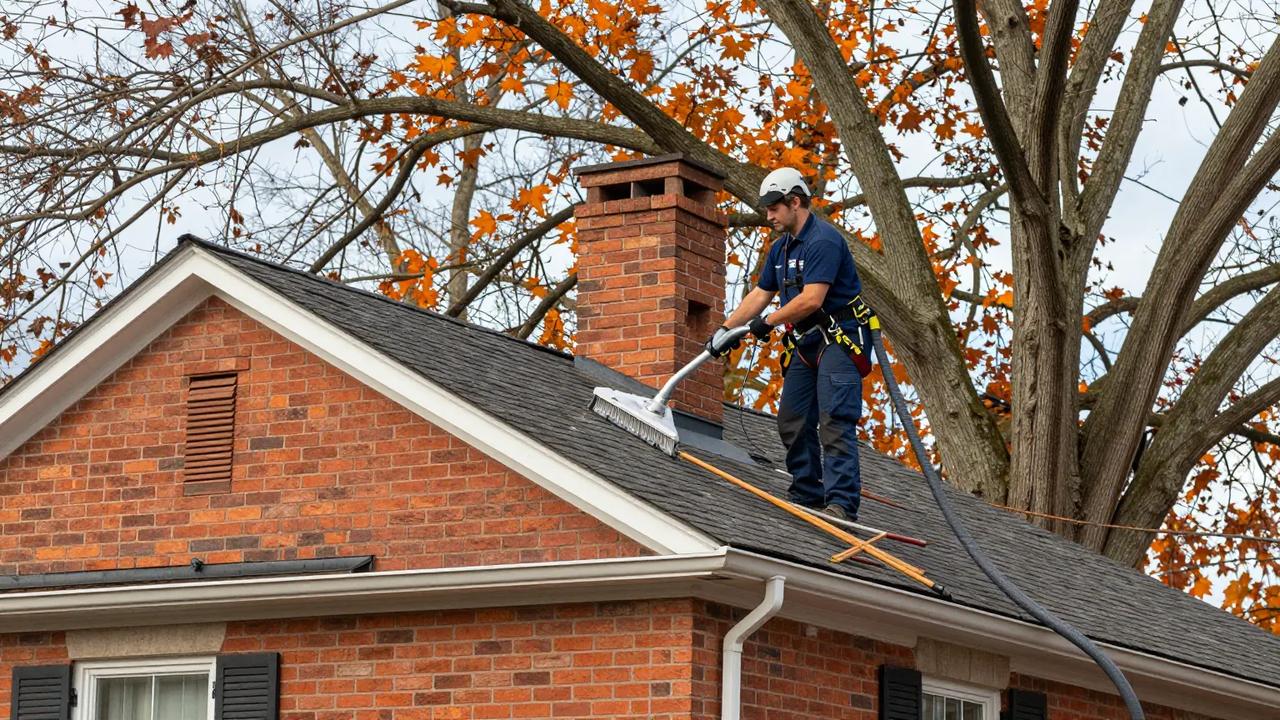
What actually drives the price of a chimney sweep in Maryland — flue count, creosote stage, access — and how to read any quote you are given.
Read the Article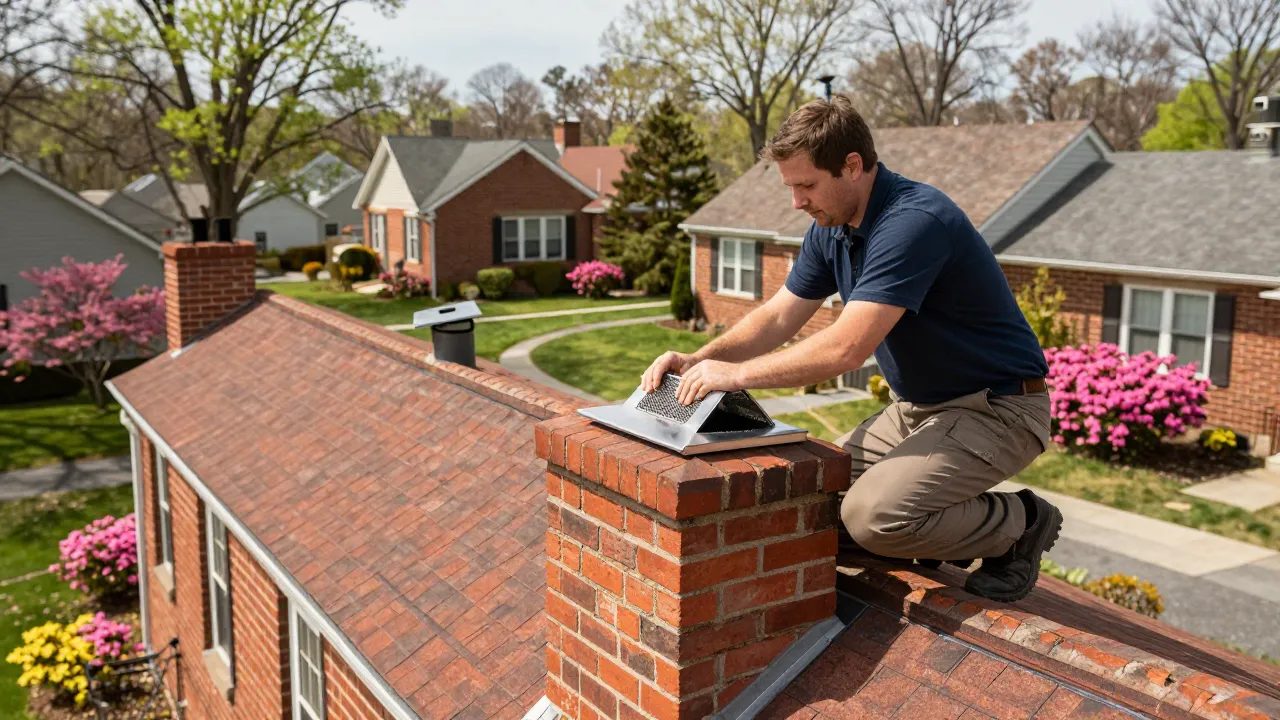
A cap costs a fraction of the repairs it prevents. The Maryland math on rain, raccoons and rusted dampers — and when a cap is not the answer.
Read the Article