
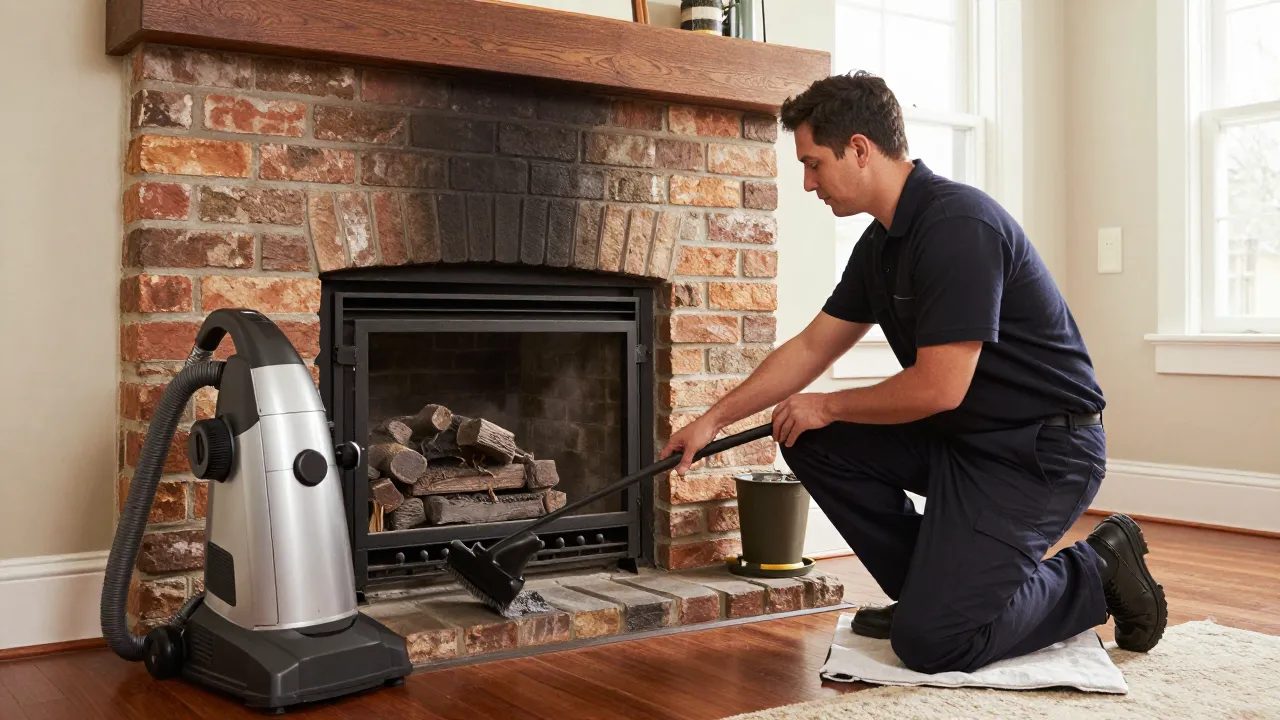
Signs Your Chimney Needs Cleaning
Campfire smell in July, smoke rolling back, black flakes in the firebox — the seven signs your flue is asking for a sweep before burn season.
Read the Article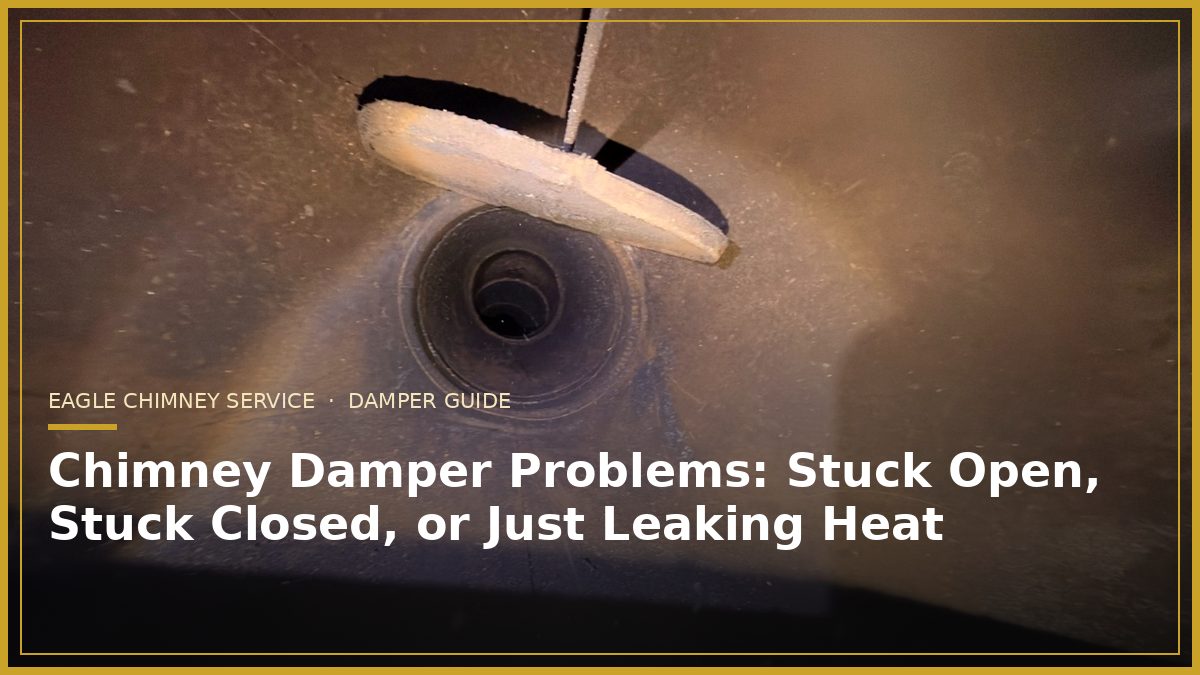
The fast answer: the damper is the metal door between your firebox and the flue. Open, it lets smoke out. Closed, it is supposed to seal heated room air in and weather, animals and downdrafts out. When it warps, rusts or jams — and most older throat dampers eventually do — you get one of three complaints: a cold draft at the hearth all winter, smoke spilling at light-up because the damper is not fully open, or summer chimney odors because it no longer seals. The featured photo shows a real damper and flue throat from one of our Maryland jobs, before service. Most damper problems are repairable, and a failed throat damper is often the right moment to consider a top-sealing damper instead.
Most Maryland fireplaces were built with a throat damper: a cast-iron plate just above the firebox, worked by a handle, lever or rotary control. It lives in the hottest, wettest part of the system, which is why it ages the way it does. The modern alternative is a top-sealing damper, mounted at the top of the flue and operated by a cable down to a handle in the firebox. Closed, its gasket seals the flue at the top — so it also does the job of a cap. Our damper repair and replacement work covers both.
This is the dangerous failure, because a fire lit under a closed or half-open damper has nowhere to send its smoke except into the room. Causes are usually mechanical: rust and creosote binding the plate, a bent handle linkage, debris fallen onto the plate, or a plate warped until it binds in its frame. Do not force the handle hard enough to break the linkage, and never light a fire to test whether it opened — check it cold, with a flashlight, looking up from the firebox. If you cannot see the plate fully open, the fireplace stays unused until it is serviced.
This failure is quieter and more expensive than it is dramatic. A cast-iron damper warped or rusted at its edges can sit closed and still leak around its whole perimeter, because metal no longer meets metal. The flue then works as a permanent vent: heated air escapes up it all winter, cold air sinks down it on windy nights, and in summer, humid downdrafts carry soot odors into the room — a common cause behind the smells in our guide to the signs your chimney needs cleaning. The home test is simple: with the damper closed and the fireplace cold, hold a hand or a lit incense stick near the damper line. Moving air means it is a vent, not a seal.
Between stuck and sealed sits the largest group: dampers that grind, drop shut mid-fire, or need two hands and a trick angle. These are worth fixing before they graduate — a damper that drifts closed during a burn can smoke a room in seconds, and one that is hard to use gets left in whatever position it was last in.
What not to do: do not oil a damper mechanism and call it repaired — lubricant burns off and does nothing for a warped plate — and do not remove a stuck damper yourself. A plate freed carelessly can drop, and the smoke chamber above it is not a place to learn by feel.
The call is made from the plate's actual condition. A sound plate with a failed handle or linkage can usually be repaired and adjusted. A plate that is warped, rusted through or cracked will never seal again. That is the case where a top-sealing damper earns its keep: it closes the flue at the top with a gasket, so the seal is airtight in a way throat dampers rarely achieve even when new, the flue below stays warmer and drier, and the unit doubles as a cap. One habit comes with it: it must be opened before every fire — the firebox handle sits where you cannot miss it, and opening it becomes part of lighting the fire.
A damper rarely fails alone. Rust on the plate usually means water has been entering from the top — a missing or failed cap, or a cracked crown, both covered in our guides to chimney caps and chimney crown damage. Heavy creosote binding a plate means the flue is due for the sweep in our guide to what a chimney sweep visit includes. Replacing the door while the top still leaks just starts the same clock again.
Late November is when both failures announce themselves: the first cold weeks expose the heat leak, and the first fires expose the stuck plate. Tell us which of the three problems you have — stuck closed, stuck open, or moving badly — and we will tell you honestly whether it sounds like a repair or a replacement, before anyone climbs anything. Eagle Chimney Service is Licensed & Insured · MHIC #117311, and every visit ends with photos of what we found, emailed the same day. Call (855) 424-6217 or send the lead form on our appointment page, and let us get the door on your flue working the way it should before the coldest weeks arrive.
Talk to a specialist — photo-documented inspections and upfront written estimates across 375 communities in Maryland, DC and Northern Virginia.
Campfire smell in July, smoke rolling back, black flakes in the firebox — the seven signs your flue is asking for a sweep before burn season.
Read the Article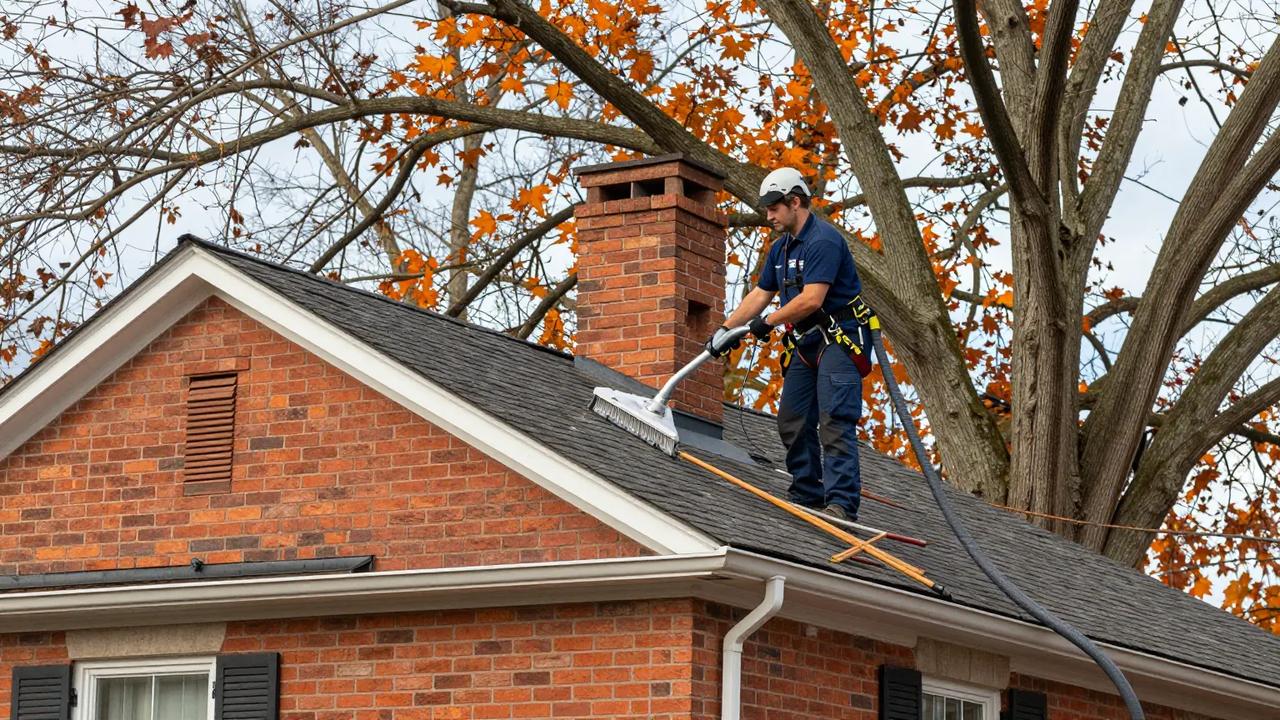
What actually drives the price of a chimney sweep in Maryland — flue count, creosote stage, access — and how to read any quote you are given.
Read the Article
A cap costs a fraction of the repairs it prevents. The Maryland math on rain, raccoons and rusted dampers — and when a cap is not the answer.
Read the Article