
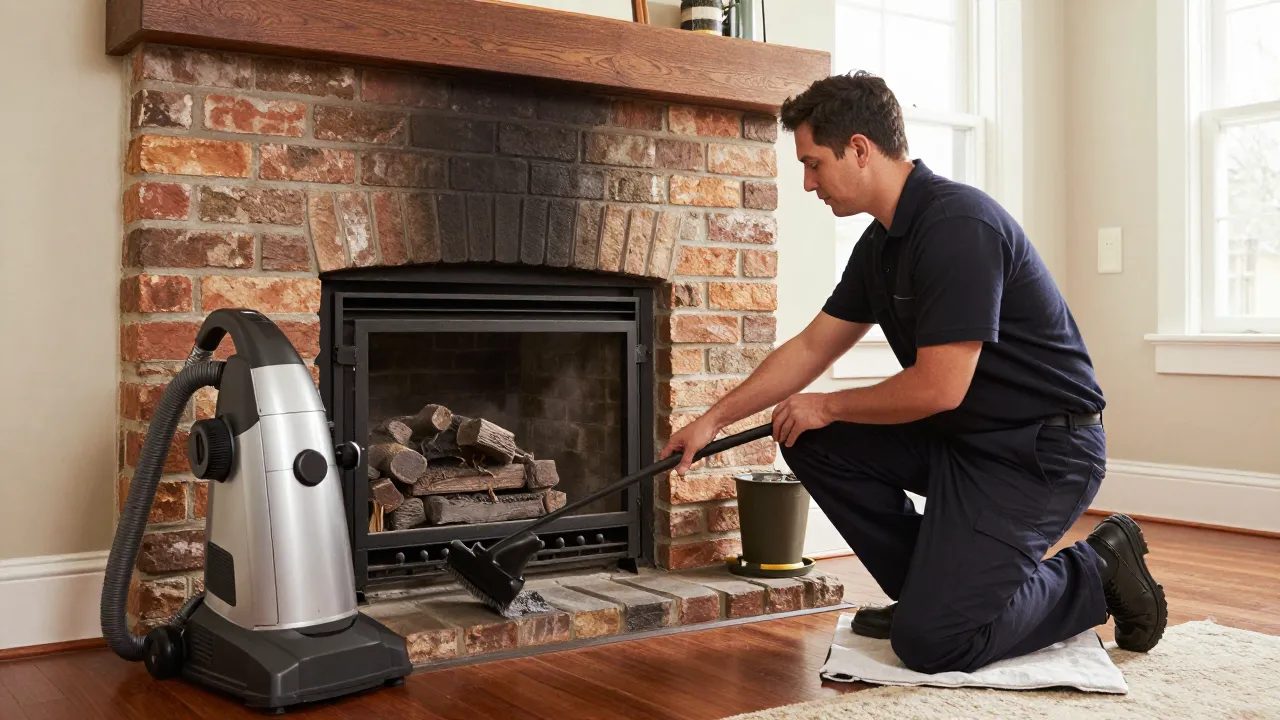
Signs Your Chimney Needs Cleaning
Campfire smell in July, smoke rolling back, black flakes in the firebox — the seven signs your flue is asking for a sweep before burn season.
Read the Article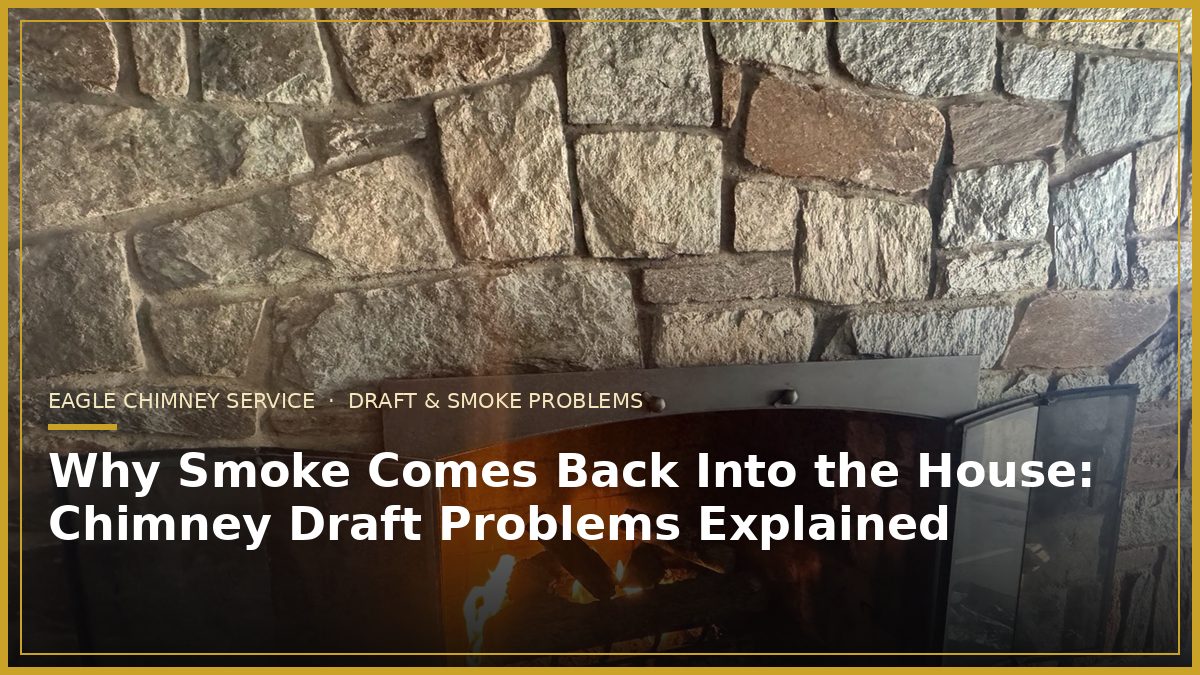
The fast answer: smoke comes back into the house when the chimney's draft — the upward pull of warm air through the flue — loses to something stronger. The usual winners are a cold flue at light-up, a blockage or heavy creosote narrowing the flue, exhaust fans pulling air down the chimney, or a flue that is the wrong size for the appliance. The pattern tells you a lot: smoke only in the first minutes points to a cold flue, smoke that worsens as fans run points to house pressure, and smoke on every fire points to the flue itself. The featured photo shows a real stone fireplace from one of our Maryland jobs.
A chimney is an engine with no moving parts. Hot gases from the fire are lighter than cold air, so they rise — and that rising column pulls more air in at the firebox and carries smoke up and out. Anything that cools the column, narrows its path, or gives the house a stronger pull in the opposite direction weakens draft.
On a cold November evening, the air inside an exterior chimney can be colder — and heavier — than the air in your living room. Light a fire under that cold plug and the first smoke spills into the room until the flue warms enough to reverse and start pulling up. This is the most common smoke complaint we hear in Maryland, DC and Northern Virginia at the start of the season, and it usually clears within minutes. A flue that warms slowly every time, though, may be oversized or serving an appliance too small for it — diagnosable, and not fixed by bigger fires.
Draft needs the full width of the flue. Creosote past 1/8 inch, a nest or debris on the smoke shelf, a fallen tile, or a damper that only opens partway all narrow the path — and smoke takes the easier exit, which is your room. If a fireplace that used to draw well has started smoking, a blockage is the first suspect. Our guide to the signs your chimney needs cleaning lists the other clues, and a chimney cleaning with its inspection confirms and clears most of them in one visit. Never try to burn a blockage out.
Modern Maryland homes are tight, and everything that blows air out — a range hood, bathroom fans, a clothes dryer — has to pull replacement air in from somewhere. If the fireplace is the easiest path, the house draws air down the chimney and pushes smoke with it. The tell is timing: the fireplace drafts fine until the kitchen fan or dryer starts, then smoke rolls in. Cracking a window in the fireplace room during light-up is a useful test — if the smoke stops, house pressure is part of the story. Lasting fixes range from makeup-air habits to a properly sealing damper, and our damper repair work covers the mechanical side.
A flue that is too large for a modern insert or stove lets smoke cool and stall before it exits. A flue that is too small cannot carry the volume the fire produces. Both smoke, for opposite reasons. Height matters too: a stack ending too close to a higher roofline can sit in wind turbulence that pushes air down, which is why some homes smoke only on windy days. No amount of sweeping fixes sizing or geometry — sometimes the answer is a correctly sized liner, sometimes a taller stack, and sometimes simply a different burning routine.
Wet wood burns cool and smoky, and a smoldering fire barely warms the flue — so its smoke is the most likely to spill. If the problem is worst with a fresh load and eases once the fire is hot, look at the fuel first: dry, seasoned wood in a hot, brisk fire drafts far better than a slow smolder. Our guide to the three stages of creosote explains the other price of cool, smoky fires — they also lay down deposits fastest.
Stop and get the system inspected if smoke spills on every fire, if it suddenly starts in a fireplace that always drafted well, if you smell smoke in upstairs rooms, or if a carbon monoxide detector ever sounds while you burn — leave the house and call emergency services first in that case. Persistent smoke means combustion gases are entering your living space, and the cause does not improve on its own.
A draft diagnosis works from the hearth outward: the damper and smoke chamber are checked, creosote and obstructions are read during a Level 1 inspection, and when the flue itself is in question a Level 2 camera inspection documents the liner tile by tile. It helps to note when the smoke happens — at light-up, all evening, only with fans running, or only on windy days. That one detail often points straight at the cause.
Tell us the pattern and we will tell you honestly which cause it sounds like — before you pay for the wrong fix. Eagle Chimney Service is Licensed & Insured · MHIC #117311, and every visit ends with photos of what we found, emailed the same day. Call (855) 424-6217 or send the lead form on our appointment page, and let us get your chimney pulling the right way again before the coldest weeks of the Maryland winter.
Talk to a specialist — photo-documented inspections and upfront written estimates across 375 communities in Maryland, DC and Northern Virginia.
Campfire smell in July, smoke rolling back, black flakes in the firebox — the seven signs your flue is asking for a sweep before burn season.
Read the Article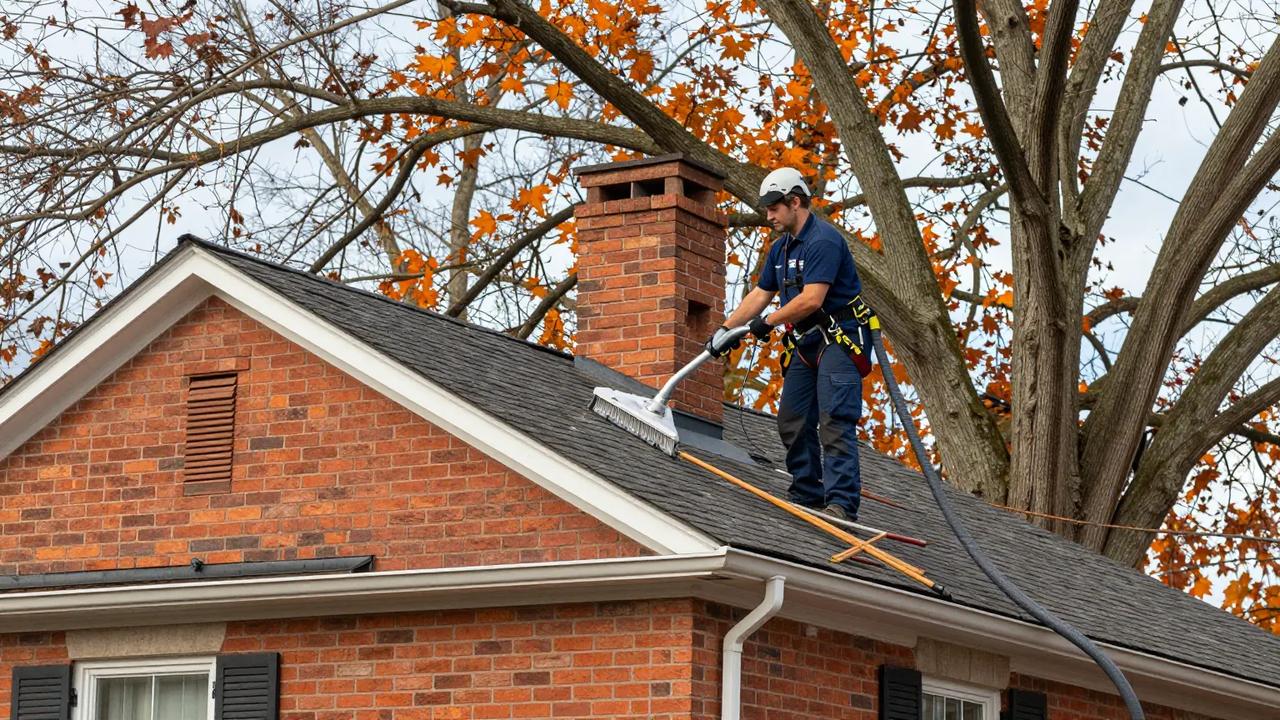
What actually drives the price of a chimney sweep in Maryland — flue count, creosote stage, access — and how to read any quote you are given.
Read the Article
A cap costs a fraction of the repairs it prevents. The Maryland math on rain, raccoons and rusted dampers — and when a cap is not the answer.
Read the Article